We have compiled a list of manufacturers, distributors, product information, reference prices, and rankings for Joining Technology.
ipros is IPROS GMS IPROS One of the largest technical database sites in Japan that collects information on.

Joining Technology Product List and Ranking from 35 Manufacturers, Suppliers and Companies | IPROS GMS

Last Updated: Aggregation Period:Feb 04, 2026~Mar 03, 2026
This ranking is based on the number of page views on our site.

Joining Technology Manufacturer, Suppliers and Company Rankings

Last Updated: Aggregation Period:Feb 04, 2026~Mar 03, 2026
This ranking is based on the number of page views on our site.

  1. 大成プラス Tokyo//others
  2. GEO Nation Tokyo//Other manufacturing
  3. null/null
  4. null/null
  5. 5 ハギテック 本社工場 Chiba//Trading company/Wholesale

Joining Technology Product ranking

Last Updated: Aggregation Period:Feb 04, 2026~Mar 03, 2026
This ranking is based on the number of page views on our site.

  1. Injection Molding Joining Technology 'NMT' [Can be made into parts without assembly!] 大成プラス
  2. Joining technology of plastic resin and metal
  3. Joining technology for metal pipes and glass tubes ハギテック 本社工場
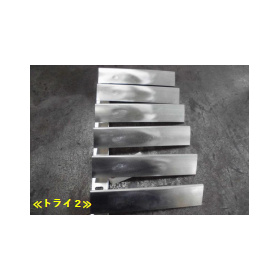
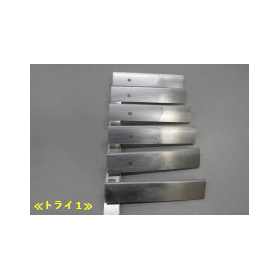
  4. 4 Introducing examples of the resin-integrated bonding technology "TRI SYSTEM". GEO Nation
  5. 4 TRI System 東亜電化

Joining Technology Product List

1~30 item / All 49 items

Displayed results

Streamline quality, cost, and delivery with the metal joining technology "Brazing"!

Are you satisfied with your current welding? With our brazing, you can join materials cleanly and affordably.

Our company specializes in the joining of stainless steel and the joining of different metals. Chitose's "Smart Brazing Team," a group of experienced professionals in metal joining, will address your various concerns regarding metal joining. Our brazing is not done using hand brazing with torches or gas, but rather through "non-oxidizing furnace brazing," which uses a reducing gas as a protective atmosphere in a continuous furnace, heating and brazing in a controlled environment. 【Features of Non-Oxidizing Furnace Brazing】 ■ High strength ■ No discoloration or burning due to the absence of flux, resulting in a beautiful finish ■ Overall heating minimizes stress and distortion ■ No need for skilled craftsmen ■ Reduction in the number of processes *For more details, please refer to the PDF document or feel free to contact us.

  • Other processing machines
  • Processing Contract
  • Joining Technology

Added to bookmarks

Bookmarks list

Bookmark has been removed

Bookmarks list

You can't add any more bookmarks

By registering as a member, you can increase the number of bookmarks you can save and organize them with labels.

Free membership registration

Joining technology for metal pipes and glass tubes

It is possible to directly bond borosilicate glass with stainless steel or copper.

It is possible to directly bond borosilicate glass with stainless steel or copper. The technology for bonding glass and metal is an advanced technique that combines materials with different coefficients of thermal expansion, and only a limited number of companies in the world can achieve this.

  • 25.03.06-y2.png
  • 25.03.06-y3.png
  • others
  • Joining Technology

Added to bookmarks

Bookmarks list

Bookmark has been removed

Bookmarks list

You can't add any more bookmarks

By registering as a member, you can increase the number of bookmarks you can save and organize them with labels.

Free membership registration

Metal Joining Technology "P-Bas(R)"

High joint strength! Providing mold components with a free shape inside and excellent cooling effect.

"P-Bas(R)" is a technology for joining materials without melting metal. It can join a wide variety of materials used in injection molds such as SKH51, SKD61, and SUS420J2, as well as die-casting molds. Impurities are less likely to accumulate, rust formation inside water pipes is less likely to occur, and coatings can also be applied inside the water pipes. 【Features】 ■ Integration without melting metal ■ The interface of the joint becomes invisible after processing ■ Anti-rust treatment can be applied to the water pipe before joining ■ The strength of the joint is over 90% of the base material's strength *For more details, please refer to the PDF document or feel free to contact us.

  • Other molds
  • Joining Technology

Added to bookmarks

Bookmarks list

Bookmark has been removed

Bookmarks list

You can't add any more bookmarks

By registering as a member, you can increase the number of bookmarks you can save and organize them with labels.

Free membership registration

Injection Molding Joining Technology 'NMT' [Can be made into parts without assembly!]

Strongly bonding plastic to metal at the molecular level! Technology using two-color molding of metal and resin.

At Daisei Plus Co., Ltd., we offer a technology for integrated molding using injection molding of metals and resins called 'NMT (Nano Molding Technology).' By applying surface treatment to metals, we form nano-level dimples on the metal surface. This groundbreaking technology generates a strong bonding force by incorporating rigid resin. It enables the development of new products that achieve weight reduction of metal exterior components such as product housings and bodies. 【Features】 ■ Bonding strength (shear strength) = 40 MPa or more ■ Strong bonding between various resins and metals allows for greater design flexibility ■ No degradation of bonding strength after thermal shock testing ■ Aluminum can be used in high-temperature and high-humidity environments ■ Nano-order dimples are formed in a short time *For more details, please refer to the PDF document or feel free to contact us.

  • others
  • Joining Technology

Added to bookmarks

Bookmarks list

Bookmark has been removed

Bookmarks list

You can't add any more bookmarks

By registering as a member, you can increase the number of bookmarks you can save and organize them with labels.

Free membership registration

Metal and resin injection molding bonding technology "NMT treatment"

Strongly bond plastic to metal at the molecular level! Form nanometer-scale dimples in a short time.

We would like to introduce our company's injection molding bonding technology for metals and resins, called 'NMT Treatment.' By performing 'NMT Treatment,' we uniformly form very stable dimples of 20 to 50 nm on the metal surface. By embedding resin into these fine dimples through injection molding and crystallizing it, a strong bond can be achieved. The strong bonding of various resins and metals allows for greater freedom in product design. 【Features】 ■ Bonding strength (shear strength) = over 40 MPa ■ The strong bonding of various resins and metals allows for greater freedom in product design ■ After thermal shock testing (-55℃/1H ⇔ 150℃/1H × 3000 cycles), there is no degradation in bonding strength (equivalent to 10-year specification for automotive engine rooms) ■ Aluminum can be used in high-temperature and high-humidity environments (after 8000 hours of testing at 85℃/85% RH, there is no degradation in bonding strength) ■ Formation of nano-order dimples in a short time *For more details, please refer to the PDF document or feel free to contact us.

  • others
  • Joining Technology

Added to bookmarks

Bookmarks list

Bookmark has been removed

Bookmarks list

You can't add any more bookmarks

By registering as a member, you can increase the number of bookmarks you can save and organize them with labels.

Free membership registration

A must-see for design and development personnel! The potential of diffusion bonding *Achievement list giveaway

A must-see for design and development personnel! The range of feasible manufacturing methods and functions will expand!

Our company engages in manufacturing using both design technologies for heat, fluid, and structures, as well as diffusion bonding technology. "Diffusion bonding" is a technique that promotes the movement of atoms at the bonding interface by heating and applying pressure to the materials to be joined. This document provides a detailed explanation of the characteristics and processing examples of diffusion bonding through photos and diagrams. If you are interested in diffusion bonding, please feel free to contact us. [Contents] ■ Characteristics of diffusion bonding ■ Processing examples of diffusion bonding *For more details, please refer to the PDF document or feel free to contact us.

  • Contract manufacturing
  • Joining Technology

Added to bookmarks

Bookmarks list

Bookmark has been removed

Bookmarks list

You can't add any more bookmarks

By registering as a member, you can increase the number of bookmarks you can save and organize them with labels.

Free membership registration

Aluminum die casting and iron joining technology

In recent years, we propose fastening methods for aluminum die casting, which are widely used in automotive-related parts.

Aluminum die casting (hereinafter referred to as ADC), which is a special cast product, has been used in various fields in recent years as a material that can instantaneously mold precision parts. It has high strength and excellent castability, but it also has low ductility, and there are very challenging aspects when viewed from the fastening side. Among our many products, we would like to introduce fasteners and fastening methods that can be used for joining ADC with different materials. 1. Self-piercing rivet RIVSET Easily mechanically joins different types of materials without pre-drilling. It is also possible to fasten three or more materials. 【Features】 ■ Joining of dissimilar metals ■ No pre-drilling required ■ High static and dynamic strength 2. Fasteners for resistance welding WELTAC A method that allows resistance welding with the iron of the lower member by driving in iron rivets. We provide riveting equipment and rivets other than welding machines. Currently, there are six types of rivets available that can be used according to the application, such as material and plate thickness. 【Features】 ■ Enables spot welding of dissimilar materials. ■ Usable for aluminum and cast materials from 0.8 to 3.2 mm ■ Capable of fastening up to 2 to 4 sheets ■ Can be used in conjunction with adhesives

  • Other Auto Parts
  • Joining Technology

Added to bookmarks

Bookmarks list

Bookmark has been removed

Bookmarks list

You can't add any more bookmarks

By registering as a member, you can increase the number of bookmarks you can save and organize them with labels.

Free membership registration

Interface adhesion analysis and next-generation adhesive bonding technology

A unique book that analyzes and evaluates adhesive interfaces in three-dimensional and complex ways using a new method, summarizing adhesive interface phenomena in spacetime across different scales.

Various attempts to identify factors leading to destruction and degradation are explained. The development of new adhesives applying new analysis techniques for adhesive bonding interfaces and a detailed explanation of next-generation adhesive bonding technologies are also provided!

  • Technical and Reference Books
  • Other microscopes
  • Other polymer materials
  • Joining Technology

Added to bookmarks

Bookmarks list

Bookmark has been removed

Bookmarks list

You can't add any more bookmarks

By registering as a member, you can increase the number of bookmarks you can save and organize them with labels.

Free membership registration

Tohoku University Technology: Technology for easy and strong resin/metal bonding: T19-064

Dry process, low cost, quick& simple joining technology!

Conventional technologies for joining metal and resin include mechanical fastening with rivets, bolts, nuts, etc. and adhesive bonding, but the former has problems such as poor airtightness and increased number and weight of parts in the bonding area, while the latter has low adhesive strength due to the lack of adhesives for thermoplastic resins and low reliability in long-term use.  The present invention relates to a technology for joining resin and metal simply, firmly, quickly, and at low cost, which differs from the above methods in that it is a dry process, does not require expensive equipment, and is not a wet process, thus eliminating the need for waste liquid treatment.

  • others
  • Joining Technology

Added to bookmarks

Bookmarks list

Bookmark has been removed

Bookmarks list

You can't add any more bookmarks

By registering as a member, you can increase the number of bookmarks you can save and organize them with labels.

Free membership registration

Joining technology that does not require welding or adhesive, such as diffusion bonding (thermal pressing).

That concern might be solved with 【diffusion bonding (thermal pressing)】! Many successful examples! Fine channels within molds are also possible! Titanium, nickel, stainless steel, and more are acceptable!

A joining technology that does not require welding or adhesive, known as diffusion bonding (thermal pressing), is a method of joining various metals by heating and applying pressure without the use of adhesives (filler materials). It offers advantages such as enabling internal flow paths that are impossible with metal processing like cutting, and it produces almost no deformation, distortion, or burrs. "Could your concerns be resolved with diffusion bonding (thermal pressing)?" - I want to create complex jigs with no burrs at all. - Can you handle even small lot sizes? - I want to prototype and then mass-produce, but the delivery time is short. - I want to join aluminum alloys. - I have a rough design concept but want to develop it while verifying prototype data. - I want to place a consistent order for everything from material procurement to processing, joining, and inspection. - If the components of filler materials or insert metals have an impact, it can cause issues in the cleaning process. - I want to challenge further miniaturization of microchannel heat exchangers for hydrogen stations. *For more details, please refer to the PDF document or feel free to contact us.*

  • Processing Contract
  • Joining Technology

Added to bookmarks

Bookmarks list

Bookmark has been removed

Bookmarks list

You can't add any more bookmarks

By registering as a member, you can increase the number of bookmarks you can save and organize them with labels.

Free membership registration

"Sprue Bush" achieved "high-cycle molding" with diffusion bonding technology.

Design complex curved flow paths (cooling circuits) within molds using diffusion bonding technology. This enables reduced molding time and cost savings through high-cycle molding!

Conventional molds can only process linear flow paths, making it difficult to arrange the flow paths evenly on the molding surface. By using Yamatec's diffusion bonding technology, it has become possible to process molds in a sliced plate form, allowing for the design of curved flow paths that can be evenly arranged on the molding surface by stacking the processed components from each plate and diffusion bonding them together. The creation of molds with internal cooling channels, which was difficult with traditional mold manufacturing methods like "cutting" or "casting," can now be achieved using diffusion bonding! It is also possible to manufacture "sprue bushes" that realize "high-cycle molding" with diffusion bonding technology! **Features** - Rapid cooling without unevenness in the product - Significant reduction in cooling time - Improved quality in product appearance, precision, strength, etc. - Increased production efficiency and reduced production costs *For more details, please refer to the PDF document or feel free to contact us.*

  • Contract manufacturing
  • Mold Design
  • Other molds
  • Joining Technology

Added to bookmarks

Bookmarks list

Bookmark has been removed

Bookmarks list

You can't add any more bookmarks

By registering as a member, you can increase the number of bookmarks you can save and organize them with labels.

Free membership registration

Electric Heating Joining Technology "ELEBON"

Direct bonding of metals or resin to metal! Achieving high strength, high precision, and high efficiency.

"ELEBON" is a conductive heating joining technology that can strongly bond resin and metal. The joining time is short, ranging from a few seconds to several tens of seconds. It achieves high strength, high precision, and high efficiency. In addition to resin materials such as PPS, PBT, PA6, ABS, and PEEK, it can also bond metal materials such as aluminum, copper, and stainless steel. 【Features】 ■ Strongly bonds resin and metal ■ Directly joins shaped parts ■ Joining time is short, ranging from a few seconds to several tens of seconds *For more details, please refer to the PDF document or feel free to contact us.

  • Company:ECO-A
  • Price:Other
  • Processing Contract
  • Joining Technology

Added to bookmarks

Bookmarks list

Bookmark has been removed

Bookmarks list

You can't add any more bookmarks

By registering as a member, you can increase the number of bookmarks you can save and organize them with labels.

Free membership registration

Introducing examples of the resin-integrated bonding technology "TRI SYSTEM".

They are used in a wide range of fields, including parts for Honda fuel cell vehicles and lithium-ion batteries for vehicles.

The "TRI SYSTEM" realizes strong and uniform adhesion by expressing a bonding mechanism (chemical bonding) on metal surfaces. As a result, complex processing of the bonding surface is not required, allowing for free design without shape constraints. It also exhibits excellent sealing properties, pressure-resistant waterproofing, oil resistance, and heat resistance. ◆ Examples of the adoption of the "TRI SYSTEM" ◆ - Parts for Honda fuel cell vehicles for ultra-capacitors - Applicable to the sealing part of the sealing plate for vehicle-mounted lithium-ion secondary batteries - High airtight connectors - Heat dissipation and insulation parts - Digital camera parts - Mobile device housings *For details, please refer to the materials available for download in the "PDF Download" section below. *Regarding this technology, we have an exclusive partnership with Toa Denka Co., Ltd.

  • Contract manufacturing
  • Joining Technology

Added to bookmarks

Bookmarks list

Bookmark has been removed

Bookmarks list

You can't add any more bookmarks

By registering as a member, you can increase the number of bookmarks you can save and organize them with labels.

Free membership registration

Direct Joining Technology of Metal and Resin: Lezarridge

Strongly bond metal parts and different materials! Address only the necessary areas with a dry method in a pinpoint manner!

"Reza Ridge" is a direct bonding technology for metals and resins that has undergone laser microprocessing. By irradiating the metal surface with a laser, a suitable bonding surface is formed, into which dissimilar materials are injected, resulting in a strong bond between the metal parts and the dissimilar materials. This treated surface is not merely an auxiliary roughening to improve adhesion; rather, the treated surface itself has a structure that generates a strong bond. 【Features】 ■ Achieves strong bonding for a wide range of metals and resins ■ Dry method that targets only the necessary areas with pinpoint accuracy ■ Easily verifiable treatment status ■ No degradation after treatment, allowing for easy storage management ■ Compatible with metals after surface treatment *For more details, please refer to the PDF document or feel free to contact us.

  • Processing Contract
  • Other contract services
  • Joining Technology

Added to bookmarks

Bookmarks list

Bookmark has been removed

Bookmarks list

You can't add any more bookmarks

By registering as a member, you can increase the number of bookmarks you can save and organize them with labels.

Free membership registration

Non-melting joining technology 'Friction Stir Welding' [Joining prototype in progress!]

Not welding, but achieving low distortion and joint strength close to the base material through solid-state bonding! We assist in improving conventional welding defects and reducing weight!

At Keihin Ramtech, we have introduced FSW (Friction Stir Welding) and have accumulated expertise in joining technology. We also possess multiple lathes and machining centers, allowing us to handle everything from machining to assembly consistently. Even if you have never adopted FSW, please feel free to consult us for support with designs compatible with FSW. We are capable of joining for various industries, from pilot production to large-scale mass production. Please consult us for joining prototypes for various materials and shapes. If you have any requests, please contact us. 【Features】 ■ Capable of achieving low distortion joints by minimizing heat input during joining ■ Specializes in joining difficult-to-weld materials and can be applied to various materials ■ Achieves excellent joint quality through mechanical processes *For more details, please refer to the PDF document or feel free to contact us.

  • Mixer/agitator
  • Joining Technology

Added to bookmarks

Bookmarks list

Bookmark has been removed

Bookmarks list

You can't add any more bookmarks

By registering as a member, you can increase the number of bookmarks you can save and organize them with labels.

Free membership registration

[Business Introduction] Dissimilar Material Joining

Contributing to the creation of new value! We possess the technology to chemically and physically bond various materials.

Our company leverages the experience and technology we have cultivated over many years to establish a consistent production system that encompasses everything from product design using plastic materials to mold making, molding, assembly, and sales, providing our customers with total solutions for plastics. Joining dissimilar materials has become an essential technology alongside the evolution of composite material technology in recent years. Within our network, we possess the technology to chemically and physically bond various materials, such as metal-metal, metal-resin, resin-resin, and glass-resin, to meet the required characteristics of products, contributing to the creation of new value. Improving the airtightness of terminals and sensors for higher reliability is one such example. 【Features】 ■ Establishment of a consistent production system for processing and molding plastic products ■ A commitment to understanding products and pursuing "monozukuri" (the art of manufacturing) to the fullest ■ Promotion of cost reduction at all stages from design to manufacturing ■ Creation of high-value-added products utilizing advanced and sophisticated technology *For more details, please refer to the PDF document or feel free to contact us.

  • Other contract services
  • Joining Technology

Added to bookmarks

Bookmarks list

Bookmark has been removed

Bookmarks list

You can't add any more bookmarks

By registering as a member, you can increase the number of bookmarks you can save and organize them with labels.

Free membership registration

Composite Material Joining Technology 'iZAi(R)'

Composite joining technology that maximizes the characteristics of materials.

"iZAi(R)" is a composite material joining technology that allows the joining of dissimilar metals that cannot be welded, and enables machining after the joining process. It makes it possible to create shapes that are impossible with conventional processing methods. Additionally, because it is a non-heating joining method, it reduces the impact on the materials. [Benefits] ■ Selection of appropriate joining methods according to the usage environment, application, and shape ■ Cost reduction as no special skills like welding are required *For more details, please download the PDF or feel free to contact us.

  • Processing Contract
  • Joining Technology

Added to bookmarks

Bookmarks list

Bookmark has been removed

Bookmarks list

You can't add any more bookmarks

By registering as a member, you can increase the number of bookmarks you can save and organize them with labels.

Free membership registration

[Production Example] Some exterior parts of a fuel cell bus

A case where technical proposals were made for issues during prototype production, resulting in changes to the drawings during mass production startup!

We would like to introduce a case where we manufactured some exterior parts for a fuel cell bus. Initially, spot welding posed no issues and ensured strength; however, from the perspective of exterior parts, the finish of the welds did not meet the standards. Since the painting method did not resolve the issue, a redesign was necessary. Based on our past experience in manufacturing aluminum parts, we proposed a riveting method for joining. This resulted in a solution that satisfied the customer in terms of both appearance and strength, allowing for a design change in the joining method. 【Case Overview】 ■Challenges - The finish of the welds did not meet the standards from the perspective of exterior parts. - The painting method did not lead to a solution. ■Results - Compared to spot welding, quality control became easier. - This led to stable quality during production and reduced manufacturing costs. *For more details, please download the PDF or feel free to contact us.

  • 1a.png
  • 1b.png
  • Processing Contract
  • Joining Technology

Added to bookmarks

Bookmarks list

Bookmark has been removed

Bookmarks list

You can't add any more bookmarks

By registering as a member, you can increase the number of bookmarks you can save and organize them with labels.

Free membership registration

TRI System

It realizes strong and uniform adhesion by expressing a bonding mechanism (chemical bonding) on the metal surface.

The "TRI System" is a bonding technology that integrates metal and resin based on a new concept. By using bonding film formation technology for metals and insert molding technology, it achieves the integration of metal and resin without the use of adhesives. The bonding film formed by surface treatment of the metal allows for a strong bond between the metal and resin, boasting a bonding strength that is incomparable to the intermolecular forces of adhesives. Additionally, since the metal and resin are uniformly bonded, it is possible to create a high airtight condition. It can bond even simple shapes, allowing for design without constraints on shape. 【Features】 ■ Strong bonding strength ■ High sealing performance ■ No need for complex shapes *For more details, please download the PDF or feel free to contact us.

  • Resin processing machine
  • aluminum
  • Other metal materials
  • Joining Technology

Added to bookmarks

Bookmarks list

Bookmark has been removed

Bookmarks list

You can't add any more bookmarks

By registering as a member, you can increase the number of bookmarks you can save and organize them with labels.

Free membership registration

Joining technology: "Vacuum brazing and electron beam welding"

Brazing with a vacuum furnace and welding with an electron beam! High-quality joining technology.

At Nikko-shi, we undertake joining processing. "Vacuum brazing" is a brazing process conducted in high vacuum, allowing for a clean brazing without discoloration. "Electron beam welding" is a method that uses an electron beam in a vacuum to melt metal for welding, resulting in a narrow molten width and deep penetration. [Joining Processing] ■ Brazing using a vacuum furnace ■ Brazing using an electron beam *For more details, please refer to the PDF materials or feel free to contact us.

  • Processing Contract
  • Other processing machines
  • Joining Technology

Added to bookmarks

Bookmarks list

Bookmark has been removed

Bookmarks list

You can't add any more bookmarks

By registering as a member, you can increase the number of bookmarks you can save and organize them with labels.

Free membership registration

High-performance resin welding and bonding technology that achieves "enhanced functionality + environmental consideration."

We are offering helpful materials that introduce application examples and solution support from our engineers for free!

"Balancing Functional Improvement and Processing Difficulty" is a common challenge we receive from our customers regarding resin processing. There are many methods for secondary processing, each with its own strengths and weaknesses. Resins, which require not only functional improvement but also consideration for the environment, may not fully demonstrate their performance with conventional methods. With our extensive experience and deep knowledge of various secondary processing techniques developed over many years, we can propose methods that suit our customers' needs. From equipment development to welding tests and after-sales service, we have a comprehensive support system in place, so please feel free to contact us. 【Exhibition Information】 Name: 7th Nagoya Automotive World Date: October 23 (Wed) - 25 (Fri), 2024 Venue: Port Messe Nagoya Booth Number: 1st Exhibition Hall N11-43 Exhibited Products: Ultrasonic welding machines, ultrasonic metal joining machines, induction heating devices, etc. We welcome consultations on welding and joining while you view the actual equipment.

Added to bookmarks

Bookmarks list

Bookmark has been removed

Bookmarks list

You can't add any more bookmarks

By registering as a member, you can increase the number of bookmarks you can save and organize them with labels.

Free membership registration

Metal/Hybrid Material Joining Technology 'DLAMP'

Adaptable to various metals! Achieved high bonding strength through the anchor effect.

"DLAMP" is a groundbreaking technology that firmly bonds metals and dissimilar materials through a completely dry process using lasers. After treating the metal surface with a laser, dissimilar materials are poured in, achieving high bonding strength due to the anchoring effect. In-house processing of DLAMP treatment is also possible through technology licensing. 【Features】 ■ Adaptable to various metals ■ Partial processing is possible (one-sided treatment, patterning) ■ Low running costs (no waste liquid or consumables generated) ■ Shorter processing time compared to pulse waves, with higher tensile strength *For more details, please refer to the PDF document or feel free to contact us.

  • others
  • Joining Technology

Added to bookmarks

Bookmarks list

Bookmark has been removed

Bookmarks list

You can't add any more bookmarks

By registering as a member, you can increase the number of bookmarks you can save and organize them with labels.

Free membership registration

Diffusion bonding contributes to the high strength of dissimilar material joints and the reduction of voids.

Joining Dissimilar Materials: A Challenge for New Manufacturing

At MOLE'S ACT Co., Ltd., we utilize atomic diffusion occurring between joining surfaces for 'diffusion bonding' and combine it with our new technology 'CORE-X technology' to achieve high strength at the joint when bonding dissimilar materials, significantly reducing voids. 【Main Metal Materials】 ◯ Tungsten alloy ◯ Copper alloy ◯ Nickel alloy ◯ Stainless steel ◯ Pure titanium ◯ Carbon copper ◯ Porcelax, etc. ◎ For more details, please refer to the PDF materials or feel free to contact us.

  • Processing Contract
  • Joining Technology

Added to bookmarks

Bookmarks list

Bookmark has been removed

Bookmarks list

You can't add any more bookmarks

By registering as a member, you can increase the number of bookmarks you can save and organize them with labels.

Free membership registration

Diffusion bonding technology

Diffusion bonding technology. Bonding strength comparable to base materials, enabling laminated bonding of thin plates.

This is an introduction to our "Diffusion Bonding Technology," which possesses top-tier technology in the country and can handle everything from basic research, idea proposals, joint development, device development, to mass production processing with in-house designed and manufactured equipment. 【Features】 - Capable of laminating thin plates - Achieves bonding strength comparable to the base material - Can manufacture hollow components in complex closed spaces - Allows for precise bonding with minimal deformation - Bonding of materials that are difficult to weld using fusion welding - Capable of bonding dissimilar metals and materials - Applicable for mass production of 3D laminated structures and 3D printers *For other functions and details, please download the catalog or contact us.

  • Welding Machine
  • Joining Technology

Added to bookmarks

Bookmarks list

Bookmark has been removed

Bookmarks list

You can't add any more bookmarks

By registering as a member, you can increase the number of bookmarks you can save and organize them with labels.

Free membership registration

Tohoku University Technology: Joining of Solid Metals: T24-079

It is possible to strongly bond phase-separated metals that could not be traditionally metallurgically joined while maintaining the shape of the components.

The technology for joining dissimilar metals is expected to contribute to weight reduction of vehicles such as automobiles, railways, and aircraft, improving safety and speed performance, as well as reducing CO2 emissions through lightweighting. However, depending on the types of metals, compatibility issues can arise, leading to phase separation and making joining difficult. The inventors developed a method for joining incompatible metals, such as Fe and Mg, using the de-alloying method as described in Patent No. 6710707. By pre-diffusion bonding an Fe-Ni intermediate layer to the tip of the Fe, and then heating the Fe-Ni intermediate layer in contact with Mg, de-alloying occurred. Only Ni was de-alloyed from the intermediate layer to the Mg side, and Mg filled the gaps in the porous structure of Fe, resulting in a composite structure where Fe and Mg were intertwined at the joint interface, achieving a strong Fe-Mg mechanical bond. Additionally, by utilizing the decrease in melting temperature associated with the Mg-Ni alloy reaction, the joint interface could be liquefied while maintaining the shape of the joined materials, thereby promoting de-alloying. At the same time, pressure was continuously applied to expel the alloy liquid, which becomes brittle upon solidification, to the outside.

  • others
  • Joining Technology

Added to bookmarks

Bookmarks list

Bookmark has been removed

Bookmarks list

You can't add any more bookmarks

By registering as a member, you can increase the number of bookmarks you can save and organize them with labels.

Free membership registration

Dissimilar Material Joining Technology "CAM Joining"

Our new joining technology is environmentally friendly, easy to install, and enables cost reduction.

CAM bonding is a technology that joins two materials using two bonding mechanisms: "Chemical & Melting." It is possible to bond "metal and resin" or "different metals" using CAM agents. CAM agents are made only from materials that consider safety and a secure environment. CAM bonding reduces costs by requiring fewer processes, no special equipment, and low consumption. 【Features】 ■ Bonding is possible with a CAM layer thickness of just a few micrometers, achieving low consumption. ■ Easy handling as bonding can be done anytime after applying and drying the CAM agent. ■ A bonding layer is formed after applying and drying the CAM agent. ■ The CAM agent is a water-soluble, easy-to-use liquid type. ■ The CAM agent is made from environmentally friendly, safe materials. ■ Compatible with all metals that oxidize on the surface (aluminum, copper, steel, etc.). ■ Bonding of glass and plastic is also possible. *For more details, please refer to the PDF document or feel free to contact us.

  • Processing Contract
  • Other mounting machines
  • Joining Technology

Added to bookmarks

Bookmarks list

Bookmark has been removed

Bookmarks list

You can't add any more bookmarks

By registering as a member, you can increase the number of bookmarks you can save and organize them with labels.

Free membership registration

[Presentation of Materials] Layered Joining of Metals Using CAM Joining

It is possible to achieve metal laminated bonding by bonding metals together and applying heat and pressure!

CAM bonding is a bonding technology that utilizes two bonding mechanisms, "Chemical & Melting," to join materials, resembling an adhesive but not being one. It can be applied to a wide range of materials, including metal-plastic and dissimilar metals in metal-metal bonding. CAM bonding is an environmentally friendly bonding technology that enables easy application and cost reduction, and it can be tailored with various functions depending on the bonding purpose. 【Features】 ■ Water-soluble and environmentally friendly ■ Low consumption for cost reduction ■ Usable after drying ■ Bonding through heated pressing ■ Functionalization is possible *For more details, please download the PDF document or contact us by mentioning "Ipros."

  • DC Motor
  • Joining Technology

Added to bookmarks

Bookmarks list

Bookmark has been removed

Bookmarks list

You can't add any more bookmarks

By registering as a member, you can increase the number of bookmarks you can save and organize them with labels.

Free membership registration

CAM joining technology that enables dissimilar material bonding with low thermal resistance - Technical documentation available.

Joining of dissimilar materials such as metals, resins, and ceramics is possible! Improving thermal dissipation characteristics is becoming increasingly important. The bonding strength is secured at over 10 MPa in shear tensile tests.

Our company conducts trial processing, specialized CAM agents, and process development using CAM bonding technology. This bonding technology combines chemical bonding and fusion. It is environmentally friendly, allows for easy construction, and can reduce costs. CAM agents are applied and dried on metal surfaces to form an organic film, and the bonded materials are joined through thermal press bonding. You can read technical documents that describe detailed features and functions. 【Examples of Bondable Materials】 ■ Metals: Aluminum, Copper, Steel, Titanium ■ Resins: Nylon, PBT, CFRP ■ Ceramics: Alumina, Glass ■ Zero thermal resistance is also possible.

  • Processing Contract
  • Joining Technology

Added to bookmarks

Bookmarks list

Bookmark has been removed

Bookmarks list

You can't add any more bookmarks

By registering as a member, you can increase the number of bookmarks you can save and organize them with labels.

Free membership registration